1. Industry Background & Market Demand
Large-scale power transmission and distribution networks form the core infrastructure of modern energy systems, where the operational stability of high-voltage equipment directly determines grid safety and power supply reliability. Long-term operational statistics of global
power grids show that the majority of latent faults in high-voltage electrical equipment stem from sustained high-current load operation, component aging, and gradual insulation performance attenuation. These abnormal operating states continuously raise the internal and contact temperature of equipment, and unmonitored persistent overheating often leads to insulation breakdown, component burnout, and even combustion or explosion accidents, causing grid outage losses and equipment replacement costs.
Traditional grid operation monitoring relies on periodic manual inspection and fixed wired monitoring devices. Manual inspection suffers from low frequency, high human error rate, and inability to capture transient temperature anomalies, while wired monitoring solutions are limited by complex wiring construction, high maintenance costs, and poor adaptability to overhead transmission lines and mobile high-voltage equipment. Against the backdrop of grid intelligent upgrading and refined operation management, the market has formed a rigid demand for maintenance-free, high-adaptability, real-time online monitoring solutions for high-voltage equipment temperature, driving the iterative upgrading of passive wireless monitoring technology in the power industry.
2. Core Technology & Concept Interpretation
The core of the high-voltage passive wireless online temperature monitoring system lies in high-voltage electric field energy harvesting technology, which is the key technical support for realizing passive, wireless and unattended monitoring of power equipment. Different from active monitoring devices that rely on battery power or external power supply, this system captures and converts the stray electric field energy generated by the operation of high-voltage equipment into stable electrical energy through built-in energy harvesting components, realizing self-power supply for sensors without external wiring or regular battery replacement.
Temperature is a core physical parameter reflecting the operating state of high-voltage electrical equipment. Manufacturing process deviations, long-term contact oxidation, arc erosion during switching operations, and mechanical loosening of joints will all increase the contact resistance of equipment electrical connections. Elevated contact resistance generates cumulative Joule heat under high-current operation, leading to abnormal temperature rise. The passive wireless monitoring technology can continuously collect real-time temperature data of key equipment nodes, accurately capture subtle temperature changes that cannot be identified by manual detection, and realize early warning of potential faults, which fills the technical gap of real-time state perception of high-voltage equipment.
3. Product Structure & Core Performance
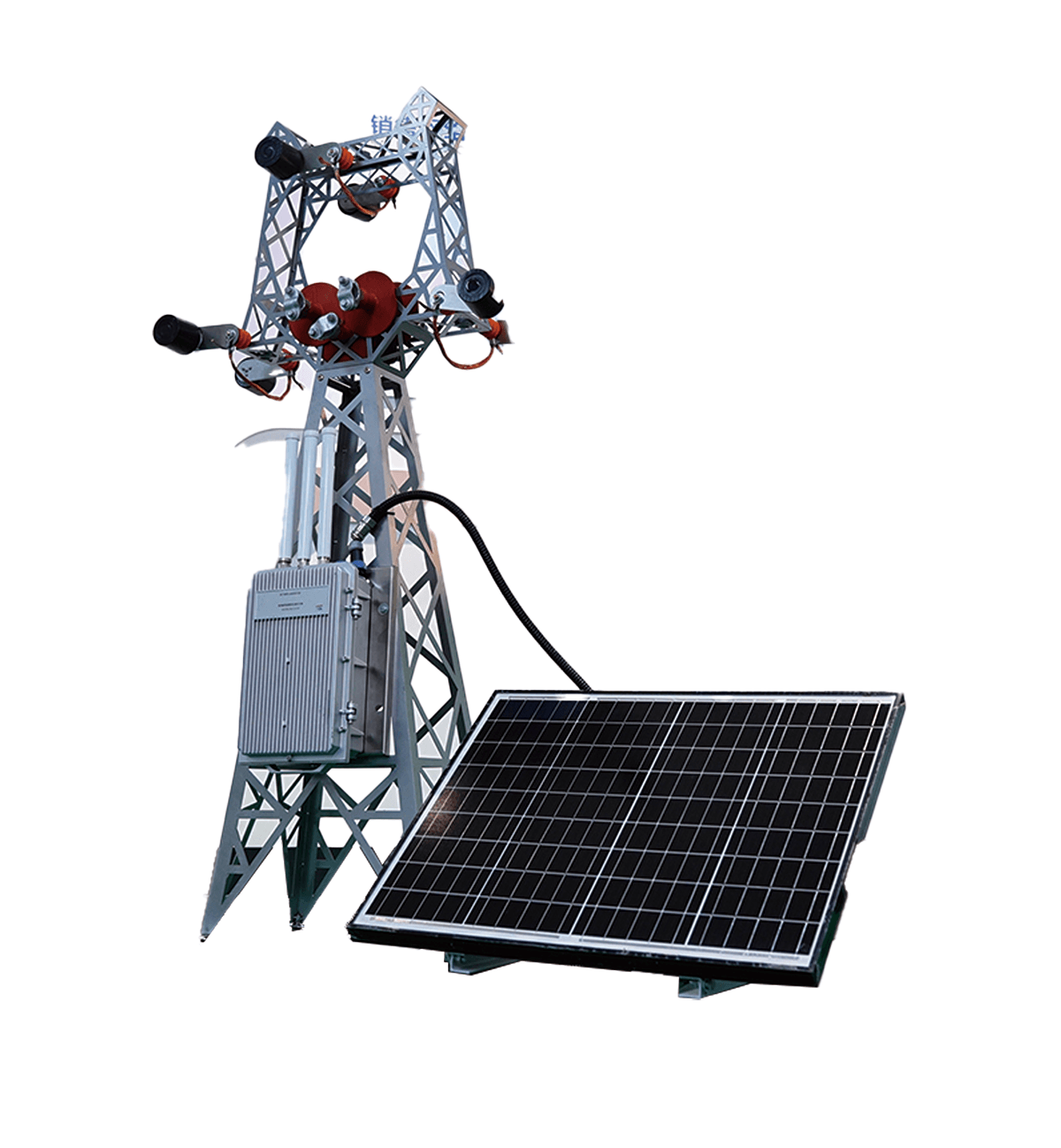
The complete set of passive wireless online temperature monitoring equipment is composed of two core functional units: passive wireless temperature measuring probes and wireless data concentrators, with integrated structural design suitable for various high-voltage operating environments.
The passive wireless temperature measuring probe is the front-end data acquisition unit of the system. It adopts high-temperature resistant engineering polymer packaging materials and integrated chip-level energy harvesting and temperature sensing modules. The miniaturized structural design avoids interference with the electric field distribution of high-voltage equipment itself, and the integrated installation structure can adapt to different equipment connection nodes. The core manufacturing process adopts SMT precision patch processing and integral sealing technology, which improves the structural compactness and environmental adaptability of the probe.
The wireless data concentrator is the system’s data processing and transmission terminal. It undertakes the functions of wireless signal reception, data sorting, storage and remote transmission. The device supports multi-point signal concurrent reception, can synchronously collect temperature data of multiple monitoring probes within the coverage area, and transmits standardized data signals to the grid operation monitoring platform. In terms of performance, the system features zero power consumption in standby, micro-power consumption in working state, long service life, and strong anti-electromagnetic interference capability, adapting to strong electromagnetic field environments inside substations and high-voltage line operation scenarios.
4. Key Factors Affecting Product Quality & Performance
The operational stability and monitoring accuracy of the passive wireless monitoring system are affected by multiple environmental and technical factors. In terms of environmental factors, extreme temperature, high humidity, and strong electromagnetic interference in substation and overhead line operating environments will interfere with electric field energy harvesting efficiency and wireless signal transmission stability, thus affecting real-time data acquisition.
In terms of product manufacturing, the precision of energy harvesting component processing directly determines the self-power supply stability of the probe; the accuracy calibration level of the temperature sensing module affects the fault early warning sensitivity of the system; and the sealing process and material aging resistance determine the long-term operational reliability of the equipment in outdoor and high-load environments. In addition, the installation fit between the probe and the equipment monitoring node will affect the accuracy of temperature collection. Loose installation or fitting deviation will lead to data distortion and missed fault alarms.
5. Supplier Selection Standards & Supply Chain Requirements
As special safety monitoring equipment for the power industry, passive wireless temperature monitoring devices have strict threshold requirements for the supply chain. In terms of core component suppliers, priority is given to manufacturers with independent R&D capabilities of electric field energy harvesting chips and industrial-grade temperature sensing modules, requiring suppliers to provide complete industrial-grade reliability test reports and power industry certification qualifications to ensure component consistency and stability.
For finished equipment manufacturers, selection indicators focus on product batch production quality control capability, on-site adaptation debugging experience of high-voltage power scenarios, and after-sales technical support response efficiency. In terms of supply chain management, raw material traceability mechanism and batch quality inspection system are required to avoid performance differences caused by raw material fluctuations. Meanwhile, suppliers need to support customized structural optimization according to different high-voltage equipment models to meet the differentiated monitoring needs of power grids.
6. Industry Pain Points & Common Technical Problems
The traditional high-voltage equipment temperature monitoring industry has long faced prominent pain points. First, periodic offline inspection has hysteresis, which cannot capture sudden temperature anomalies caused by instantaneous load fluctuation and equipment aging, leading to latent safety hazards that cannot be eliminated in a timely manner. Second, wired online monitoring equipment has high construction and maintenance costs, and the wiring structure is easy to aging and damage in outdoor high-voltage environments, increasing grid operation risks instead.
In terms of product application, early wireless monitoring products have common technical defects such as unstable signal transmission, low energy harvesting efficiency in weak electric field environments, and poor low-temperature resistance, which lead to low data acquisition accuracy in extreme working conditions. In addition, most monitoring systems lack adaptive threshold early warning functions, unable to match the temperature change characteristics of different high-voltage equipment, resulting in frequent false alarms or missed alarms.
7. Application Scenarios & Industrial Use Cases
Relying on passive self-power supply and wireless transmission characteristics, the monitoring system is widely applicable to full-scene temperature monitoring of high-voltage transmission and distribution equipment, covering overhead transmission lines, substation equipment and indoor
power distribution devices.
In overhead transmission line scenarios, the equipment can be installed on line flow deflectors and tension clamps to monitor the temperature change of wire connection nodes under long-term high-current operation, effectively avoiding line breakage and heating faults caused by clamp aging and loose contact. In substation scenarios, it is suitable for temperature monitoring of high-voltage disconnector contacts and transformer outlet nodes, realizing real-time perception of key connection points of substation core equipment.
In indoor power distribution scenarios, the system supports busbar temperature measurement of withdrawable indoor switchgear and insulation plug temperature monitoring at cable joints of ring main units, solving the problem of difficult real-time monitoring of closed power distribution equipment. At present, this monitoring solution has been applied in large-scale regional power grid upgrading projects, effectively reducing the failure rate of high-voltage equipment thermal faults and improving the intelligent operation level of power distribution networks.
8. Industry Trends & Future Development Direction
With the global energy grid accelerating towards intellectualization, digitization and unattended operation, passive wireless online monitoring technology has become an important development direction of power equipment state monitoring. The industry is gradually eliminating traditional manual inspection and wired monitoring modes, and developing towards full-coverage, high-precision and intelligent predictive maintenance.
In terms of technical iteration, future products will further optimize electric field energy harvesting efficiency, adapt to more complex weak electric field and extreme weather operating environments, and improve the stability and accuracy of long-term monitoring. In terms of system function, the monitoring system will be deeply integrated with big data and grid intelligent management platforms, realizing automatic analysis of equipment temperature change trends, intelligent fault diagnosis and predictive maintenance reminder, changing from passive fault disposal to active risk prevention.
In terms of industrial application, the product will expand from single temperature monitoring to multi-dimensional state monitoring, covering temperature, humidity, vibration and other equipment operating parameters, forming a full-state passive monitoring solution for high-voltage power equipment, and further improving the safety and intelligence level of ultra-large-scale power grid operation.
9. Frequently Asked Questions (FAQ)
Q1: Does the passive wireless monitoring device affect the normal operation of high-voltage equipment?
A1: The front-end probe adopts miniaturized non-intrusive structural design and high-insulation packaging materials, which will not change the original electric field distribution and mechanical structure of high-voltage equipment. The passive energy harvesting mode does not consume grid power, and the equipment has passed industrial-grade electromagnetic compatibility tests, which will not cause interference to the normal operation of high-voltage transmission and distribution equipment.
Q2: What is the service life and maintenance cost of the passive monitoring system?
A2: The system has no battery and vulnerable wiring components, and the core components adopt industrial-grade aging-resistant materials and processes. The service life can reach more than 8 years under normal operating conditions. There is no regular maintenance and component replacement cost in the whole life cycle, which greatly reduces the later operation and maintenance investment of the power grid compared with traditional monitoring schemes.
Q3: Can the system adapt to extreme outdoor high and low temperature environments?
A3: The optimized hardware structure and packaging process enable the equipment to adapt to the operating temperature range of -40℃ to 85℃. It can maintain stable energy harvesting and data transmission performance in high-temperature summer outdoor environments and low-temperature winter icing environments, meeting the all-weather monitoring needs of overhead lines and outdoor substation equipment.
Q4: How to ensure the accuracy and real-time performance of monitoring data?
A4: The system adopts high-precision industrial temperature sensing chips and adaptive data collection frequency adjustment technology, with a temperature measurement accuracy of ±0.5℃. The wireless concentrator supports real-time data uploading and breakpoint resume transmission, which can avoid data loss caused by short-term signal interference, ensuring the authenticity, accuracy and real-time performance of monitoring data.


 RELATED
 RELATED
 RELATED
 RELATED

 English
 العربية
 中文
中文 қазақ
қазақ



 WhatsApp
 телефон